
Podenco Training - Adopting or fostering a nervous dog.
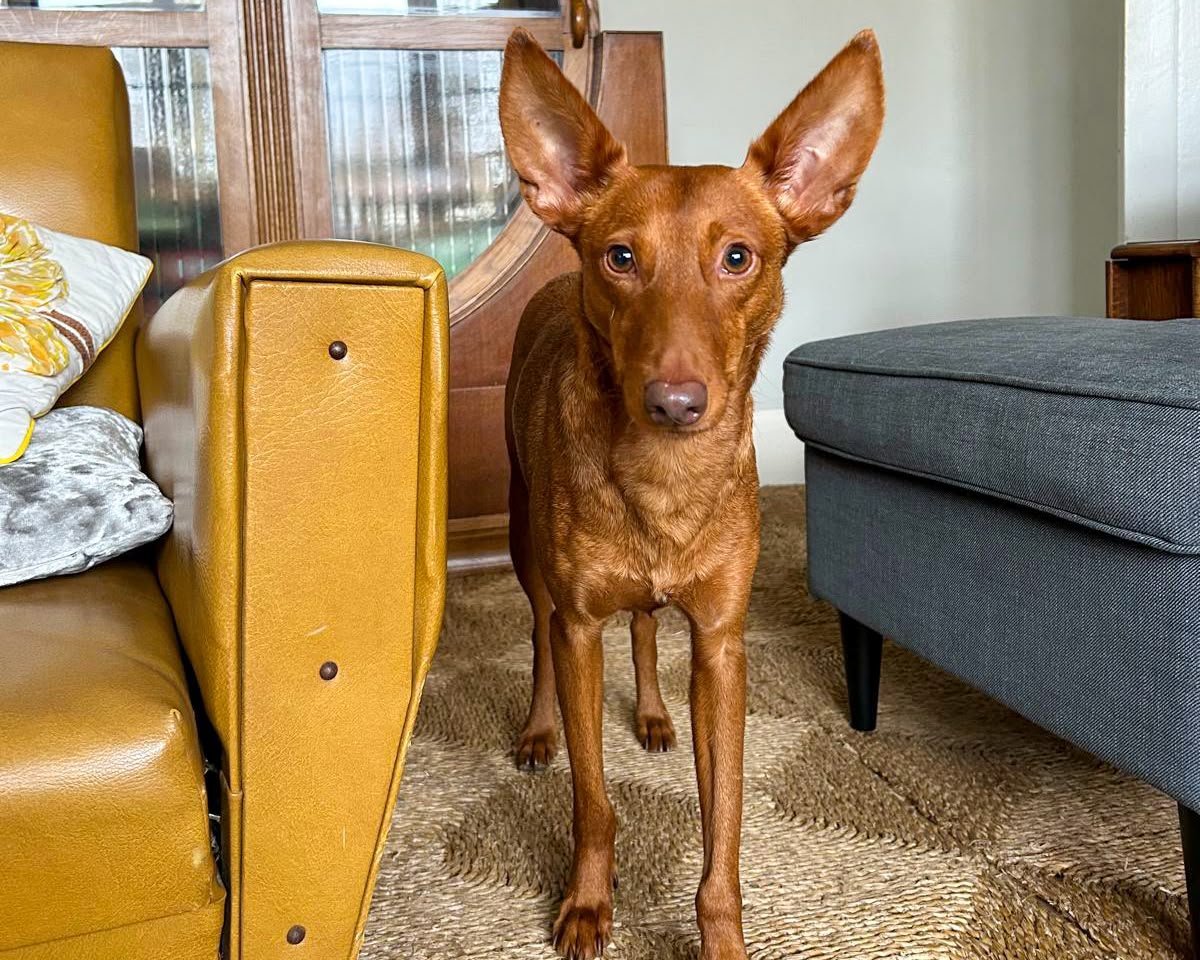
Canija, now settled in her home and taking life in her stride.
What it can really look like…
Adopting or fostering a nervous dog can be one of the most rewarding experiences. Watching a dog who once tried to disappear begin to feel safe, show their personality, ask for affection and genuinely enjoy their life is incredibly special. The progress might be slower and less straightforward than it is with some dogs, but that can make every little step feel even more meaningful.
We also want to be honest that it can be hard.
Adrian, Thomas & Canija’s story.
When Adrian and Thomas adopted Canija, we had explained that she was a very nervous dog and that it might take time for her to settle and learn to trust them. They knew they were not bringing home a dog who would necessarily walk through the door and immediately make herself comfortable on the sofa. But knowing that and actually living it can feel very different.
They had prepared a crate for her and tried to make everything as calm and welcoming as possible. Canija ignored the crate, did a massive wee on the carpet and crawled under their bed, where she stayed for an entire week. She came out to eat and toilet, but only when they weren’t in the same room – they had to set up a remote camera to see her venturing out from her hiding place when they weren’t there. They joked that it was like having a little monster living under the bed, but in reality they were worried.
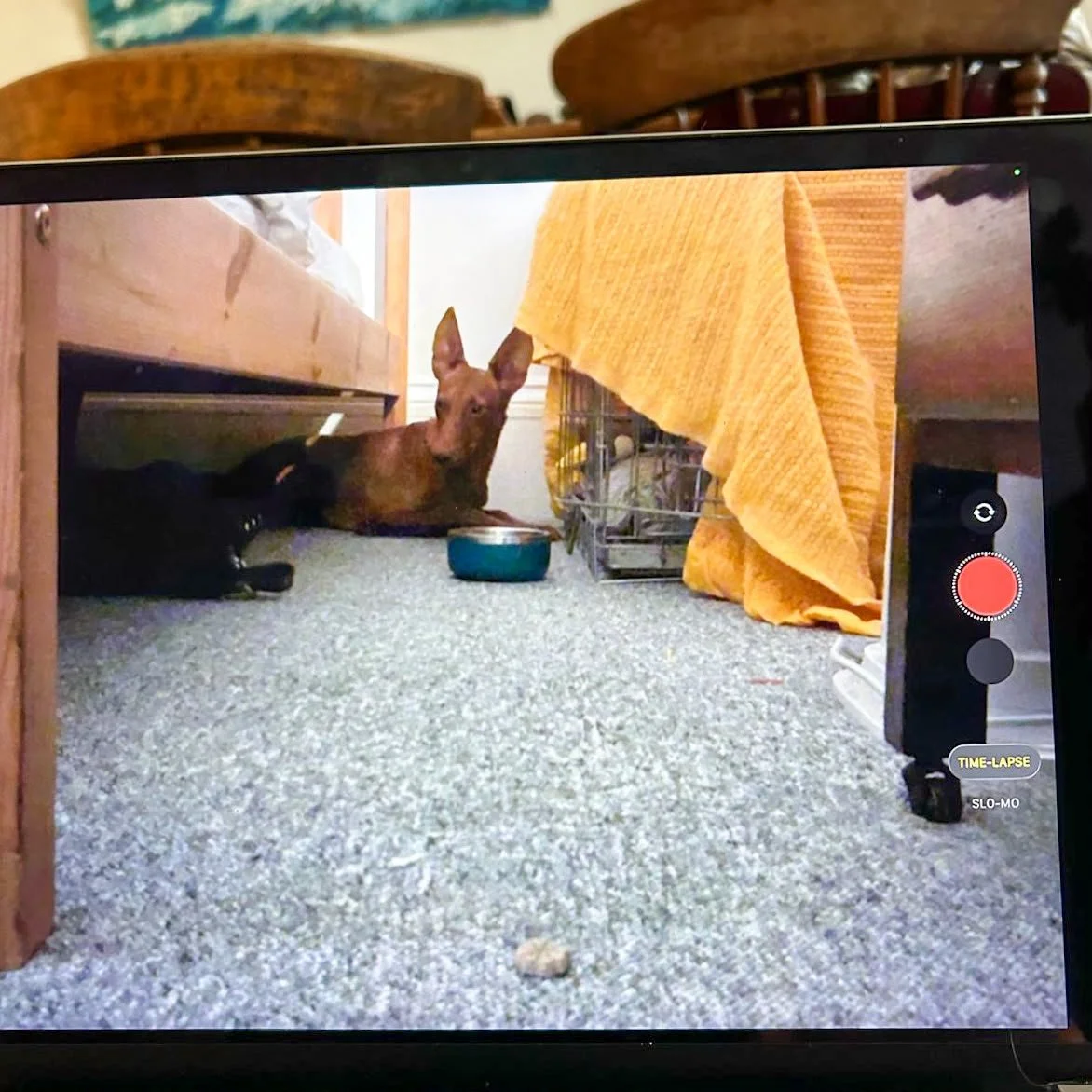
Canija in her hiding spot under the bed.
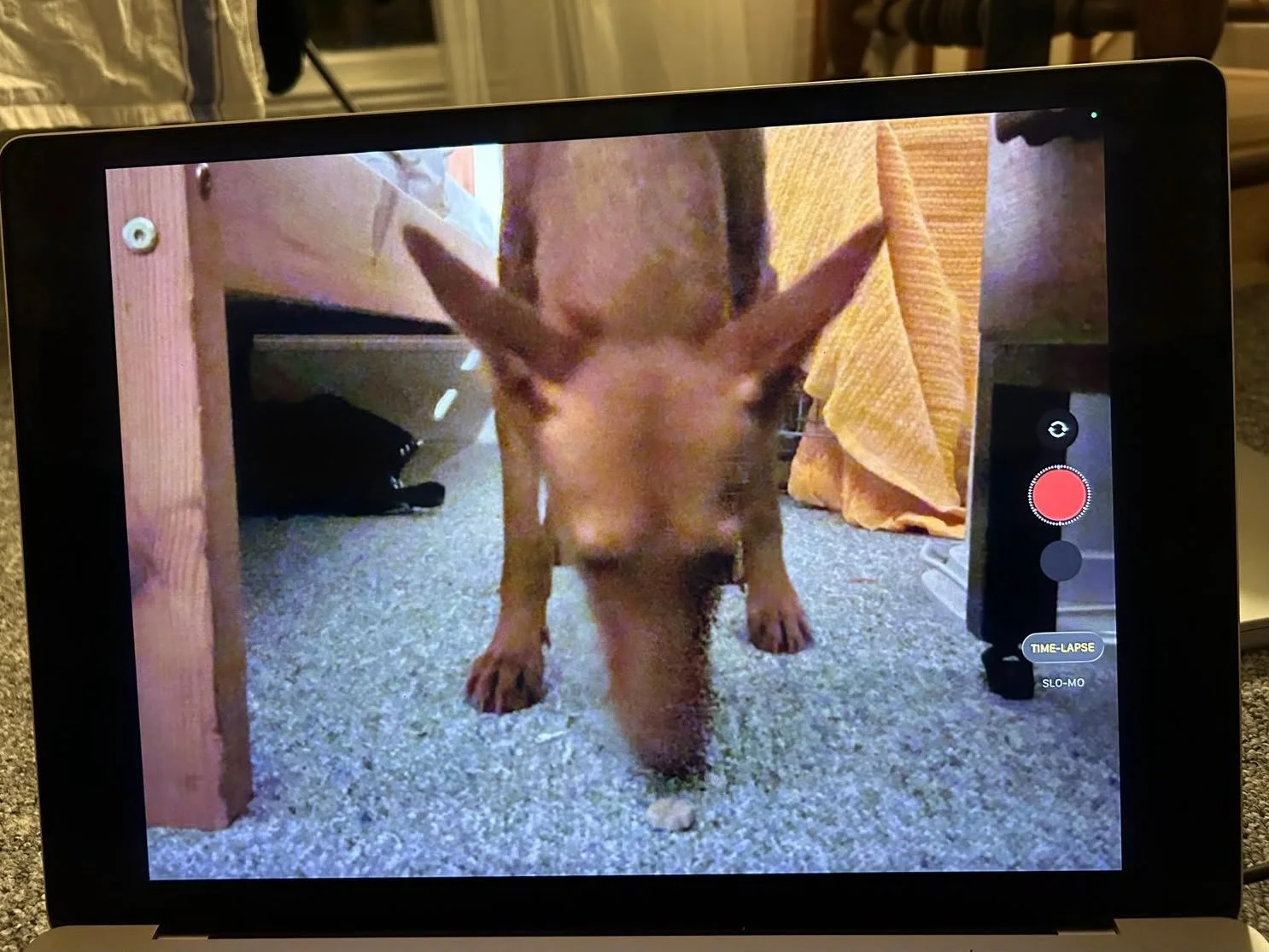
Canija venturing out for a treat.
Would she ever come out? Had they already done something wrong? Did she hate them? Were they going to spend the rest of their lives looking at her big ears beneath the bed and cleaning poo off the carpet?
Those thoughts are much more normal than people realise. Even when you have listened carefully, asked the right questions and gone into an adoption with realistic expectations, the reality can still hit differently.
We are not sharing Canija’s story to put people off adopting or fostering a nervous dog. Quite the opposite. Today, Adrian and Thomas describe her as the easiest, funniest and sweetest dog in the world, and say that earning her trust and affection has been incredibly rewarding. But that trust took time, and the journey was not a straight line.
We want to talk honestly about what bringing home a very nervous dog might look and feel like, what can help, and why finding parts of it difficult does not mean that you or the dog are failing.
The reality of bringing home a nervous dog.
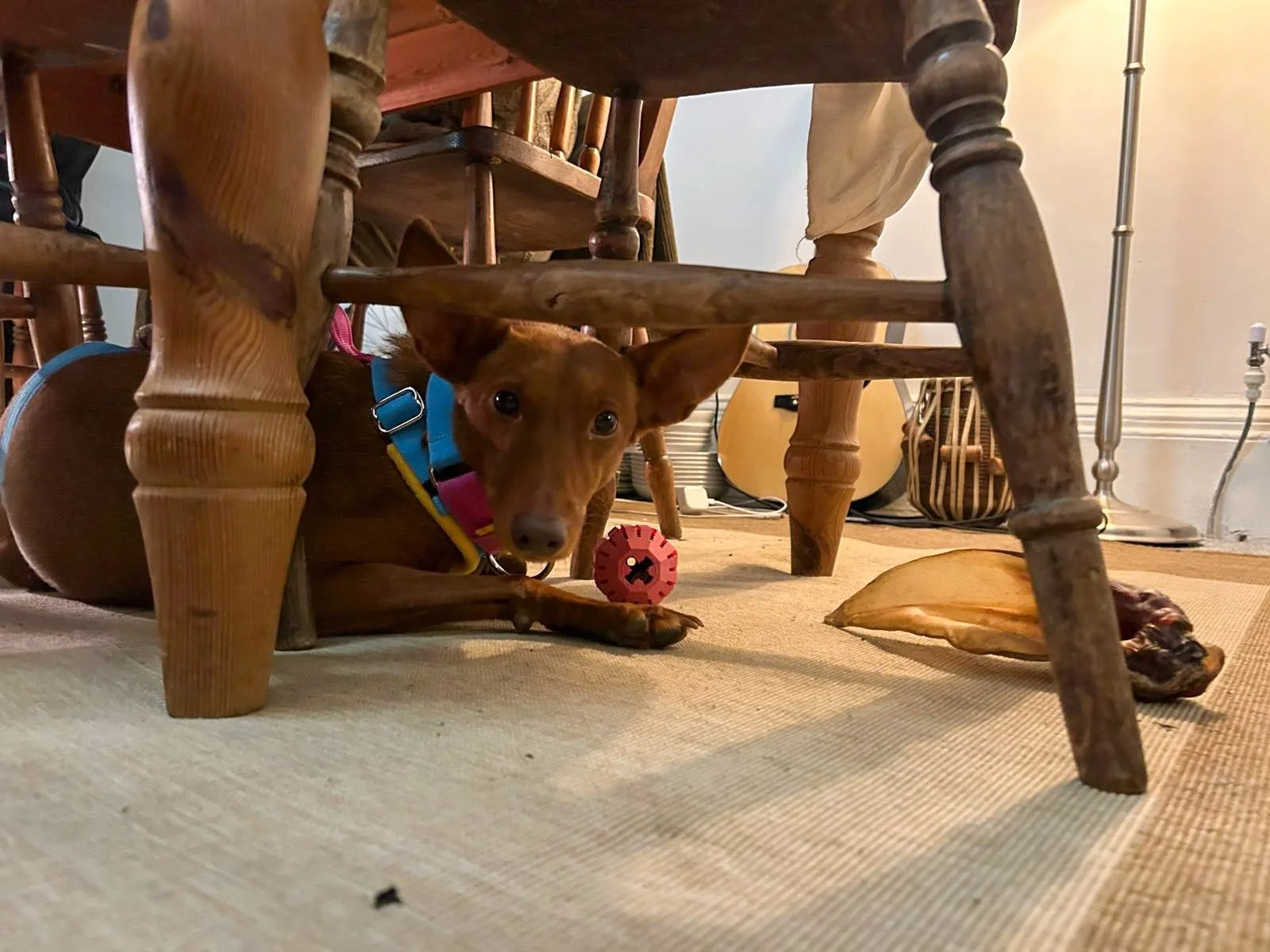
Canija taking security from being under a table.
Some dogs arrive in their new home and begin exploring almost immediately. Others try to make themselves as small and invisible as possible.
A very nervous dog might hide under furniture, stay in their crate, press themselves into the corner of a room or completely freeze when someone approaches.
They might not eat while you are there, they may wait until the house is quiet before moving around, they might toilet indoors because they are too frightened to go into the garden, or because everything is so overwhelming that they cannot think about where they are supposed to go. They may avoid looking at you, move away when you enter the room or seem to have very little personality at all.
This can be difficult for people, particularly when you have spent weeks or months looking forward to bringing the dog home. You may have imagined them curling up beside you or beginning to understand immediately that they are safe. Instead, you can feel as though you are sharing your home with a dog who wants nothing to do with you.
It’s really important to remember its not personal - a shut-down dog is not rejecting you or being ungrateful. They are trying to cope with an enormous amount of change in the only way they currently know how. Canija hiding under the bed was her way of creating distance and finding somewhere that felt manageable. She did not yet know Adrian and Thomas. She did not understand the house, the sounds, the routine or what was expected of her and needed time to begin working those things out.
Keep their world small.
When a rescue dog arrives, it is tempting to show them all the lovely things their new life will include. Walks, visitors, family members, trips out, new places and people who are excited to meet them. For any of our dogs that have made the long journey from Spain, its important for all of that to be on hold until they have decompressed. You have the rest of their lives for all of that!
They may already have experienced kennels, transport, unfamiliar handling, new people and a completely different environment within a very short space of time. Even positive experiences can be too much when everything is new.
Initially, we will usually advise no walks and no visitors. Keep the dog’s world small, calm and predictable. Give them access to a limited area of the home rather than expecting them to manage the whole house. Provide an appropriate safe space, keep noise and activity low and establish a simple routine around food, toileting and sleep. There is no need to spend every moment trying to interact with them.
During Canija’s first week, one of her adopters was always at home with her, even though they barely saw her. They were present, but they were not constantly reaching under the bed, trying to stroke her or forcing her to engage and sometimes that calm presence is exactly what a nervous dog needs.
Sitting in the same room, talking quietly or simply getting on with normal life helps the dog begin learning that you are safe and predictable. Their world can grow later - the first job is helping them feel safe in the small part of it they are already trying to manage.
Learn to read what they are telling you.
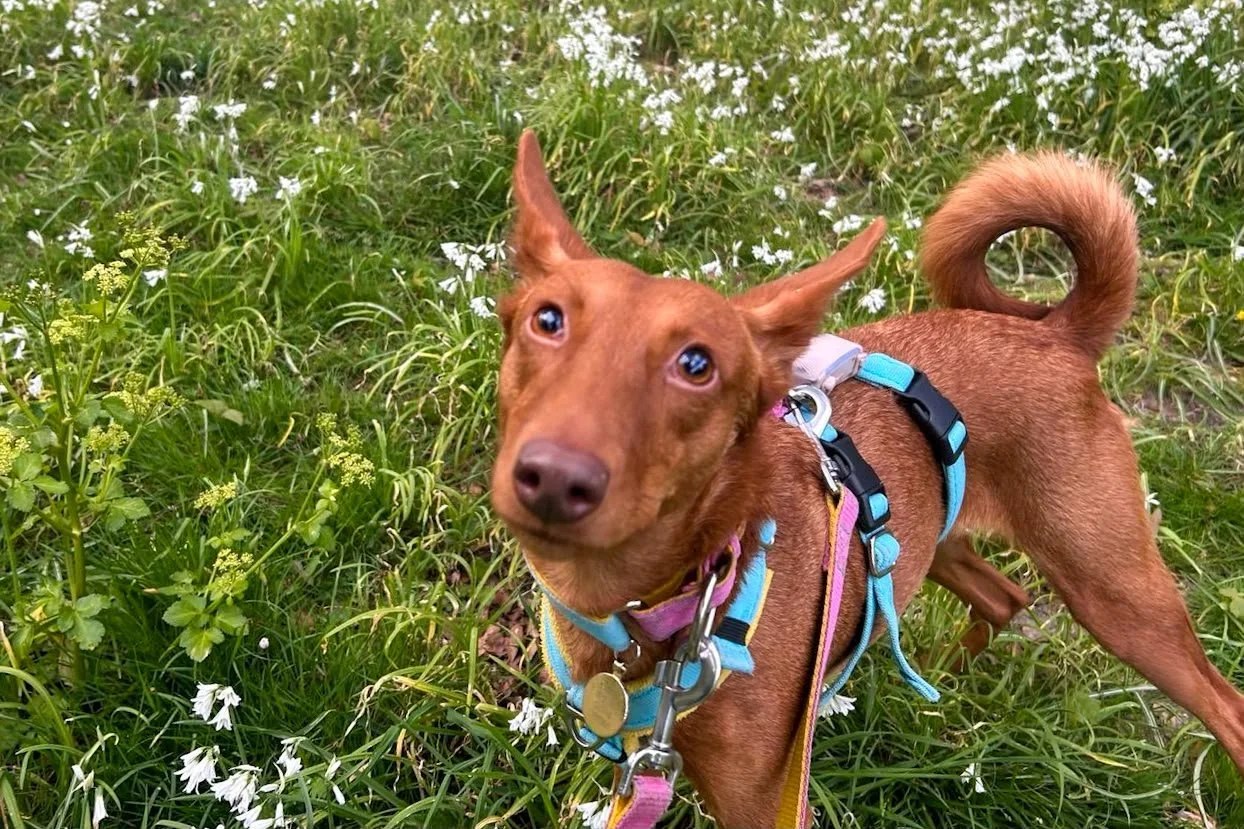
Canija on an early walk.
The canine ladder of communication is useful when living with any dog, but it is particularly important with a very nervous one. Dogs communicate discomfort in lots of ways. Some signals are obvious, but many are easy to miss.
A shut-down dog may not bark or growl. They may turn their head away, lick their lips, blink, lower their body, become very still or move further into their bed or hiding place. They may stop taking food, lean away from your hand or freeze when touched.
A dog who is completely still is not necessarily relaxed. Sometimes they are simply too frightened to move. This is why we need to look at the whole dog rather than assuming that silence means they are coping. Are their muscles soft or tense? Are they choosing to remain beside you, or do they look unable to leave? When you stop touching them, do they move closer or create more distance?
We will cover growling, barking, raised hackles and other more vocal fear behaviours in a separate blog, because they deserve more space than we can give them here. But the principle is the same.
Behaviour is communication and the earlier we notice and respond to the quiet signs, the less likely the dog is to feel that they need to communicate more loudly.
Let contact happen on the dog’s terms.
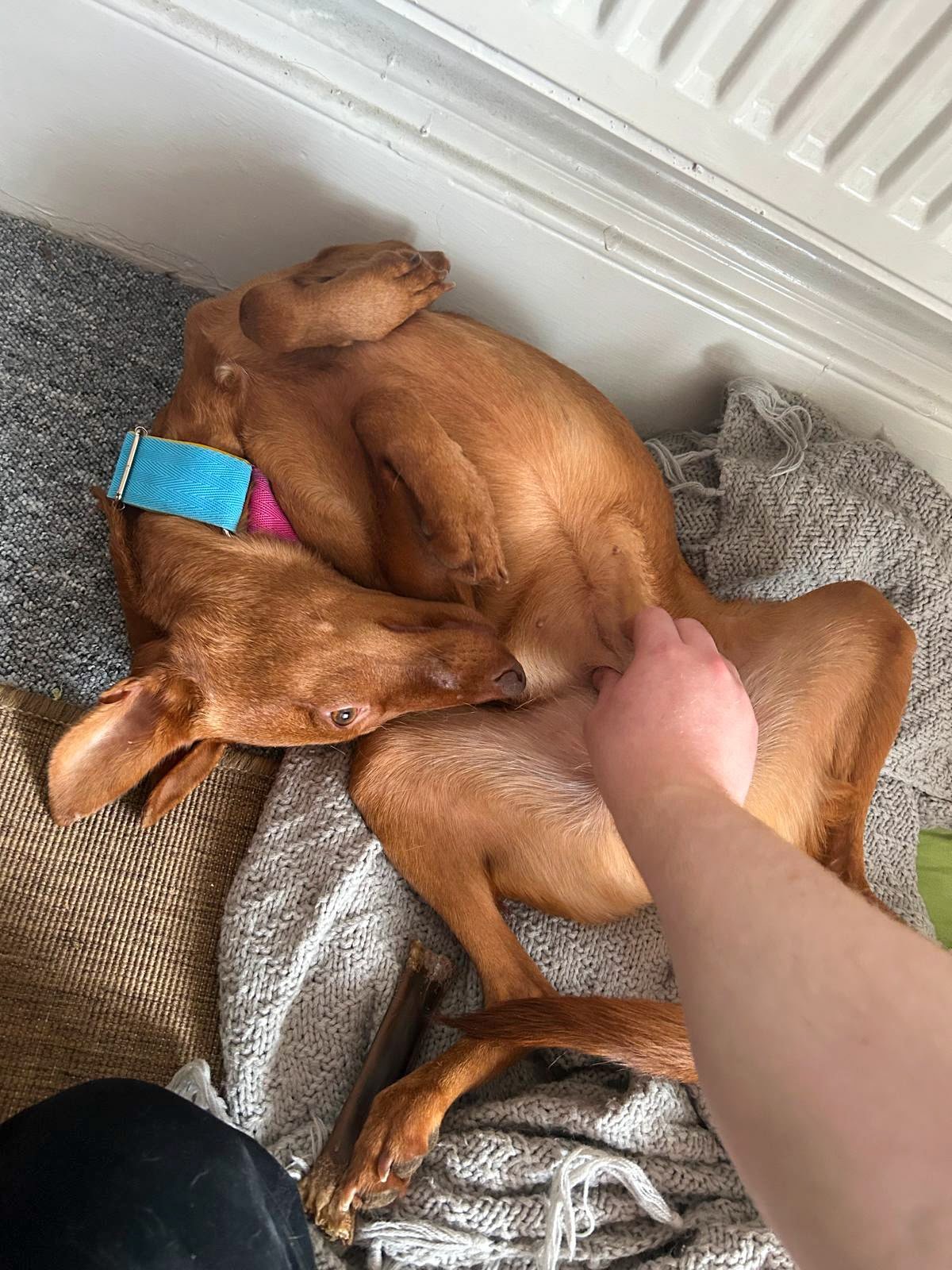
Canija enjoying a tummy rub on her terms.
It is natural to want to comfort a frightened dog. We want to stroke them and show them that we are kind but affection only feels reassuring when the dog wants it. Where possible, allow the dog to approach you. Let them sniff, pause or move away without following them. Avoid leaning over them, holding your hand to their face, reaching repeatedly towards them or putting pressure on them to interact. This includes hand feeding them treats - it can often feel like an intuitive way to build a bond, getting them to accept a treat from your hand but it actually creates conflict - they want the treat, but are too scared to willingly take it. Start by putting treats on the floor and walking away and in time you can build up.
When they do begin seeking contact, the three-second rule can be really helpful. Stroke the dog gently for around three seconds, then stop and move your hand away and see what they do next. If they lean back towards you, nudge your hand or clearly ask for more, carry on. If they move away, turn their head, stiffen or seem unsure, give them space.
It sounds like a very small thing, but it gives the dog some control over what is happening. For a dog who may not have had much choice in their previous life, learning that they can say “that is enough” and be listened to is a big part of building trust.
Knowing when to wait and when to gently encourage.
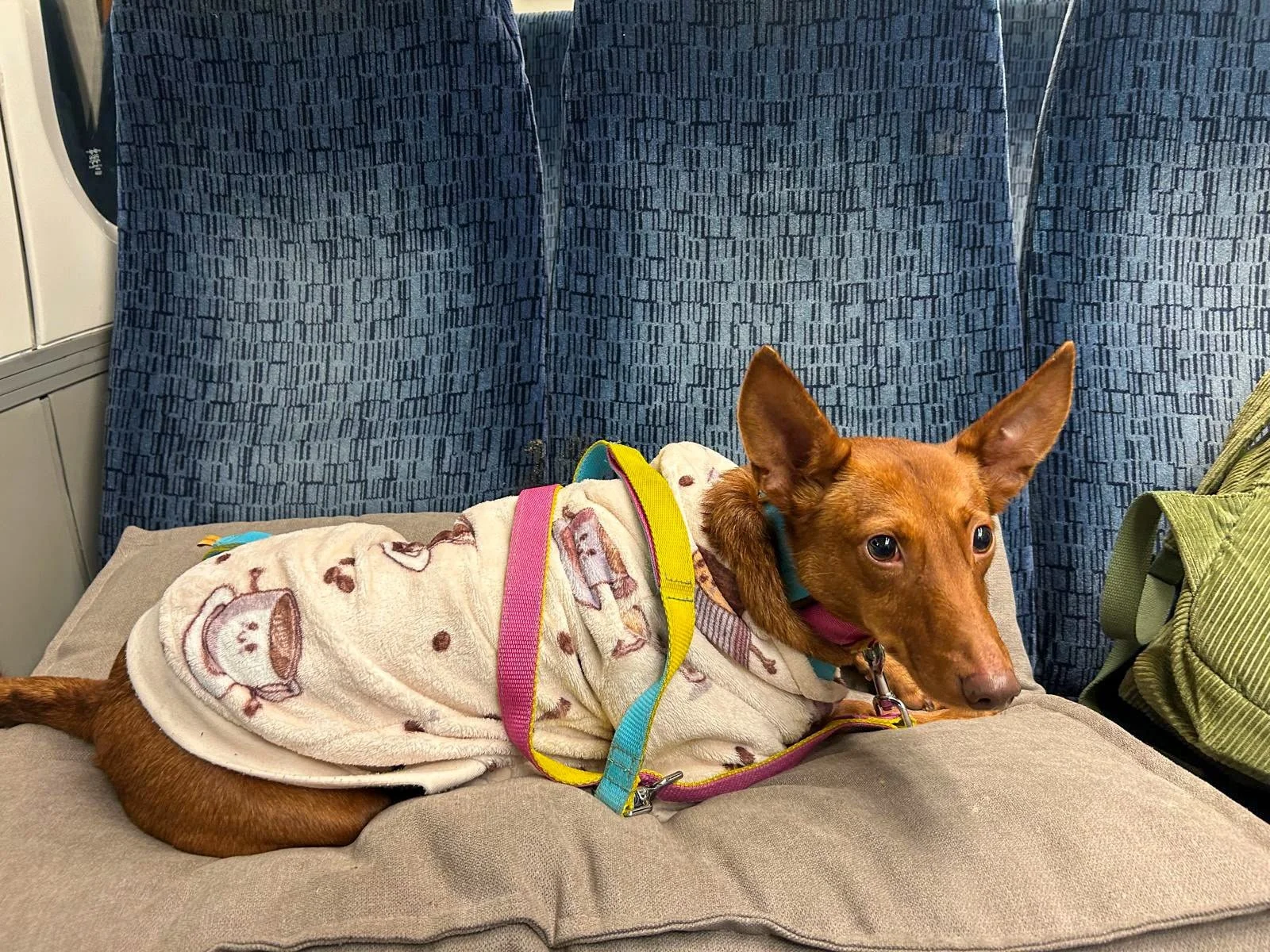
Canija getting a little push to try transport.
Safe spaces are important, but sometimes a dog can become so hidden away that it makes it harder for them to begin engaging with the home around them.
Canija stayed under the bed for a week with very little change. After talking it through with Jackie, our trainer, Adrian and Thomas gently moved her out and made sure she still had somewhere safe to retreat to. It felt difficult, but in Canija’s case it was the right step at the right time. She began approaching them and, within a few weeks, was moving around the home and interacting with them much more freely.
This is not something we would suggest doing without speaking to us first. Knowing when a dog needs more time and when a little gentle encouragement might help depends on the individual dog and how they are responding. Jackie and the wider HFP team can help you work out the best next step.
Progress is not linear.
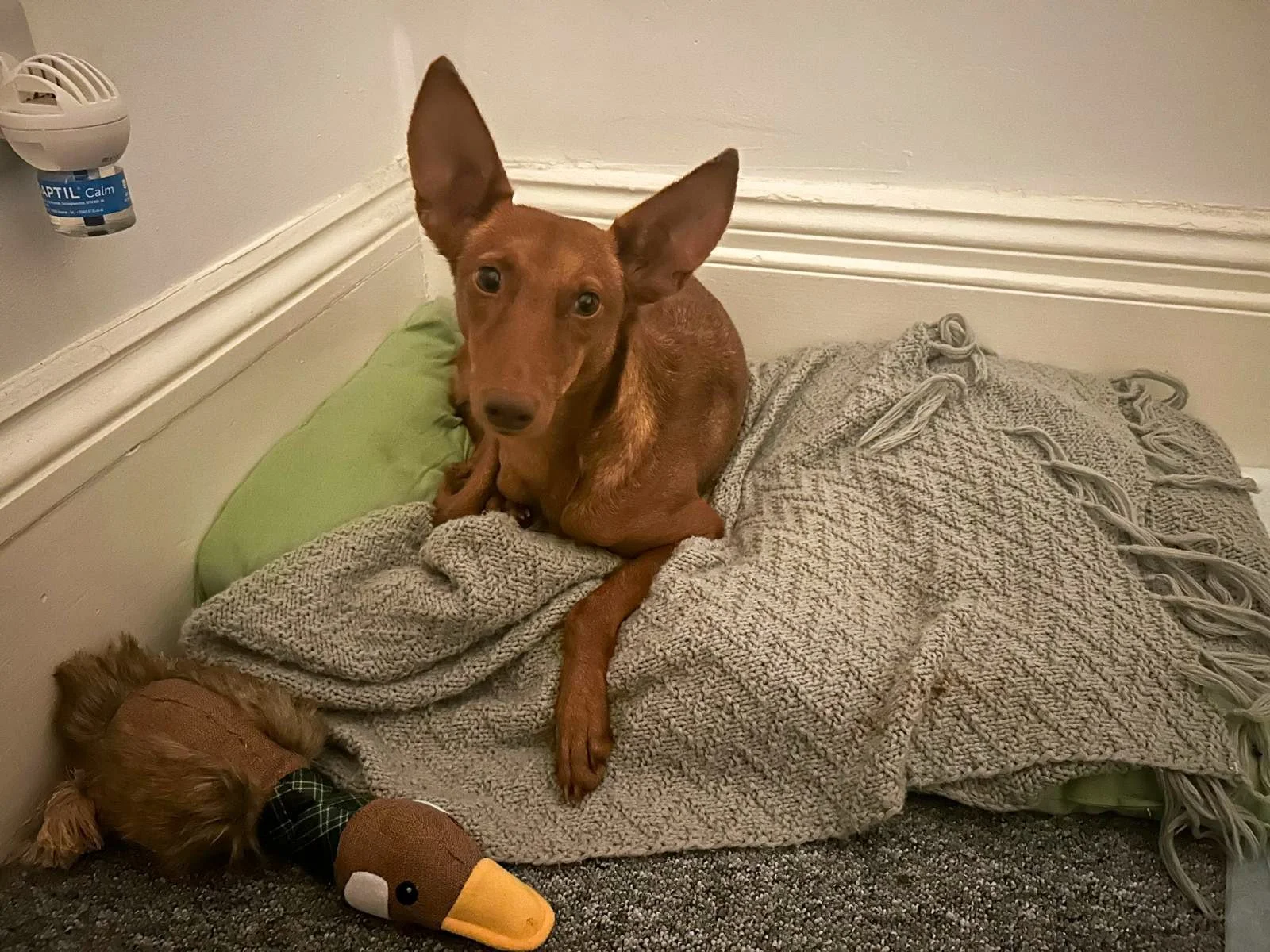
Canija still enjoying a safe space when needed.
Adrian and Thomas described every little bit of progress being followed by a few steps backwards and that is very normal. Many people have heard of the 3-3-3 guideline for rescue dogs. It suggests approximately three days to begin decompressing, three weeks to start understanding the routine and three months to feel more settled.
It can be a useful starting point because it reminds us that dogs need time but its not something you can set your calendar to! A dog has not failed if they are still nervous after three months, and neither have you. Some dogs settle quickly. Others need many months, or longer, before they feel truly secure and progress can also look different from one day to the next.
A dog might come up to you for a sniff today and refuse to come near you tomorrow. They might walk confidently into the garden several times and then suddenly struggle with the doorway again. They may build a close relationship with one person while remaining frightened of someone else in the home. Its important to remember that it does not mean you are back at the beginning.
We always encourage adopters to look at the overall direction of travel rather than judging everything by one difficult day. With a nervous dog, progress may mean eating while you are in the room, sleeping deeply instead of remaining alert, walking past you instead of waiting for you to leave or recovering more quickly after something frightens them.
I have fostered and adopted dogs where the biggest milestones have been toileting in the garden, taking a treat from the floor while I was nearby, not getting up off their bed when I walked past or showing genuine excitement when I came home.
Those things might sound tiny to someone else, but when you have watched a dog living in a near-constant state of fear, they really are not. Over time, you start to see more of the dog underneath it.
They might nudge your hand for a fuss, choose to sit beside you or suddenly start playing and those moments feel enormous because you know how much courage they have taken.
Positive, reward-based training.
Our approach will always be positive and reward based. Podencos are sensitive dogs who respond best to a calm, considered approach. This means helping the dog feel safe enough to make choices and rewarding them with something they value. That might be food, play, praise, access to a comfortable space or simply the removal of pressure.
There are so many different training schools of thought out there, but with the team having worked with Podencos for over 10 years, we see time and time again that this is what works best. Reward-based training helps us build a good relationship with our dog, positive associations and show the dog that good things happen around people, new spaces and unfamiliar experiences.
A dog can only learn when they are able to think and respond. When they are completely overwhelmed, our priority should be reducing the pressure and helping them feel safe again.
It is all right to find it hard.
We need to be honest about the fact that living with a nervous dog can be difficult. You may feel sad that they are frightened of you. You might worry that you are not making progress quickly enough. You may feel frustrated by another accident in the house or guilty because part of you wishes things were easier.
You can love the dog and still find the experience hard. You can feel proud of their progress and disappointed by a setback. You can understand why they are behaving in a certain way and still feel tired by it.
Adrian and Thomas had moments where they wondered whether they could do it and whether they had already got things badly wrong. Those worries did not make them bad adopters. They made them people who cared deeply about getting it right.
Please do not struggle in silence or wait until everything feels like a crisis before contacting us. Asking for support gives us the chance to make small changes before problems become much harder to manage. It can also simply mean having a conversation with someone else who gets it – all of us on the team have been in that situation before – tears, regret, worry, stress – its normal and a sympathetic ear can go a long way!
Where Canija is now?
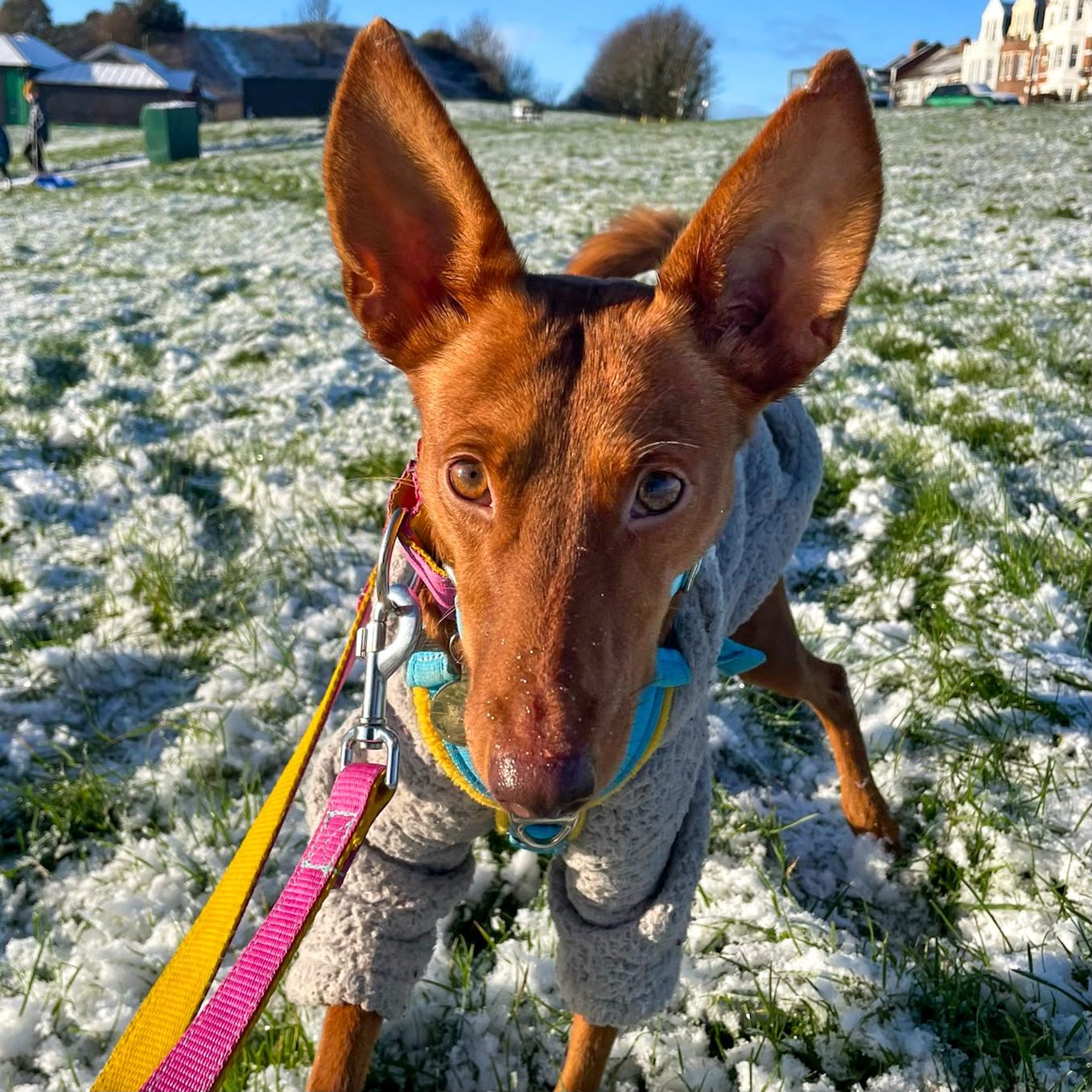
Canija enjoying her walks.
Once Canija began coming out from beneath the bed, Adrian and Thomas started to see who she really was. She began approaching them and after working up to it, happily accepting treats from their hands, travelled with them in the car and met other dogs, is playful and sometimes throws her whole body at their shins when she gets the zoomies. She is still cautious around some people, and that is fine. Adrian and Thomas make sure people respect her boundaries and give her the time and space to approach when she is ready. She has not forgotten everything that frightened her, and she has not become a completely different dog but she has learnt that she is safe.
“Having Canija has been so rewarding, and every day we’re grateful that we’ve managed to earn her trust and affection.”
Support does not end when a dog is adopted.
At Hope for Podencos, finding a dog a home is not the end of our responsibility. We want to make sure the dog and everyone living with them are thriving and so we dedicate a great deal of time to post-adoption and foster support. Jackie is available to all HFP adopters and fosterers, alongside the experience and support of our wider team. She initiates check ins at 1 week, 1 month and 3 months post adoption but our advice is always to reach out in between those – don’t wait and save things for the check-ins. Tell us as soon as things happen so we can help you make sense of it and work on next steps.
We can help you understand the dog’s body language, review videos, adjust the home set-up, plan introductions and work out when they need more space or a little carefully managed encouragement. We are not here to judge you or tell you that you should be coping better, we are here to help.
For anyone interested in reading more about the reality of living with nervous Podencos, Two Peas in a Pod, written by one of our adopters, explores that journey in much more detail. You can order it on Amazon here.
Adopting or fostering a nervous dog will not be right for every home. It requires patience, consistency, realistic expectations and a willingness to let progress happen at the dog’s pace.
But watching a dog begin to feel safe, show their personality and choose to trust you is incredibly rewarding. Could you offer a nervous or overlooked dog the time and space they need to flourish? Take a look at the dogs currently searching for adoptive and foster homes, or speak to the HFP team honestly about whether this journey could be right for you.
With much love! The HFP team xxx
Article written by Gemma Eley
If you would like to adopt or foster a Podenco you can see our available dogs here!