
Adopting a Leish dog - Odin’s story.
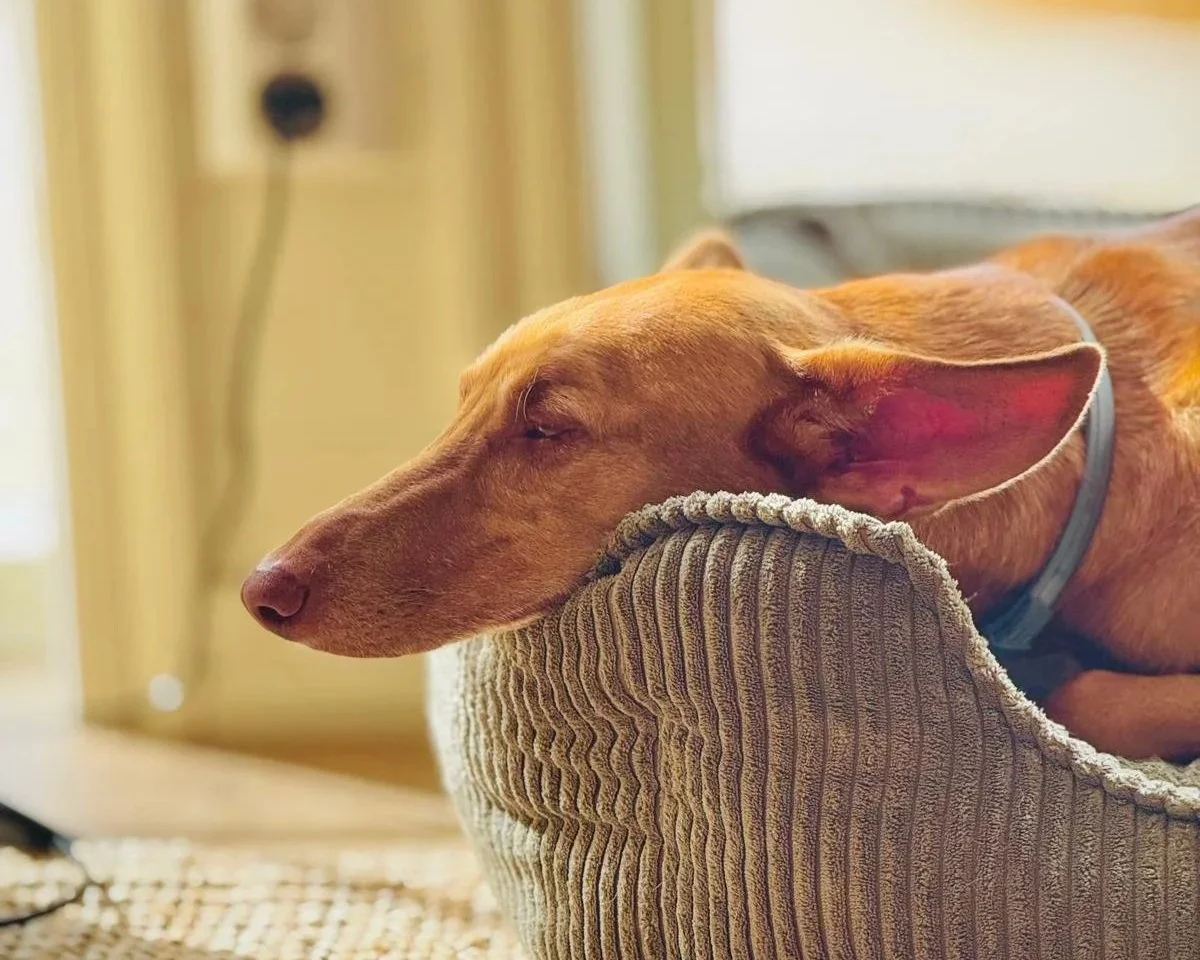
Odin, taking a well deserved nap!
When people first hear that a Podenco has tested positive for Leishmaniasis, it can sound frightening. There are new words to understand, tests to consider and the possibility of ongoing medication.
Sadly, this means many wonderful Leish-positive dogs are overlooked, even when they are happy, healthy and responding well to treatment.
Odin is one of those dogs. Adopted from Hope For Podencos and now living his best life in Germany, he and his family wanted to share what living with Leish has really been like.
“Hey Odin!”
“Yeah?”
“The awesome team from HFP asked whether we would talk about your Leishmaniasis.”
“HFP? I love those guys! Sure, tell them all about it. Tell them how easy it has been to manage so far, how I can still eat dry food and how I am far too busy siestaing to worry about it.”
“Right, I’ll tell them…”
When we adopted Odin, he was considered low positive for Leishmaniasis and was receiving Leisguard as part of the treatment plan provided by his rescue team in Spain.
“Is Leisguard the yellow liquid you poured over my food?”
“Yep.”
“I didn’t mind that at all!”
Before Odin travelled to Germany, he had another blood test. This came back negative for Leish antibodies.
“Yay me!”
It was brilliant news, although we understood that a negative result did not mean the Leish had been cured. Leishmaniasis is a lifelong condition and results can change over time, so continued monitoring would still be important.
The rescue team sent Odin to Germany with his full treatment plan and the bottle of Leisguard they had already been using. This meant we could continue his course without any interruption. A few weeks after he finished it, our vet tested him again. This also allowed us to compare his previous Spanish results with those from the laboratory in Germany. His result was, once again, effectively negative.
“Yay me again!”
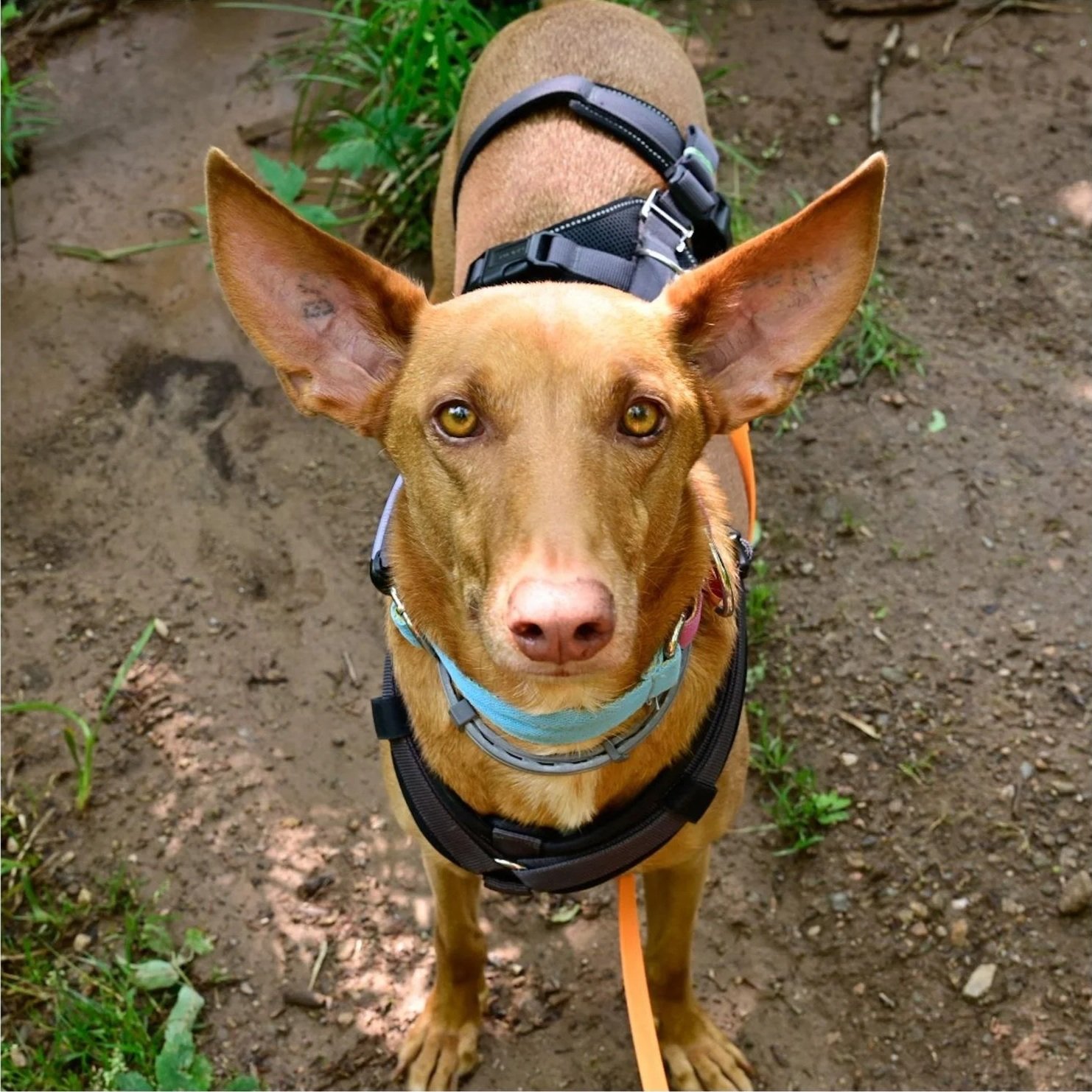
Odin making sure he’s being heard!
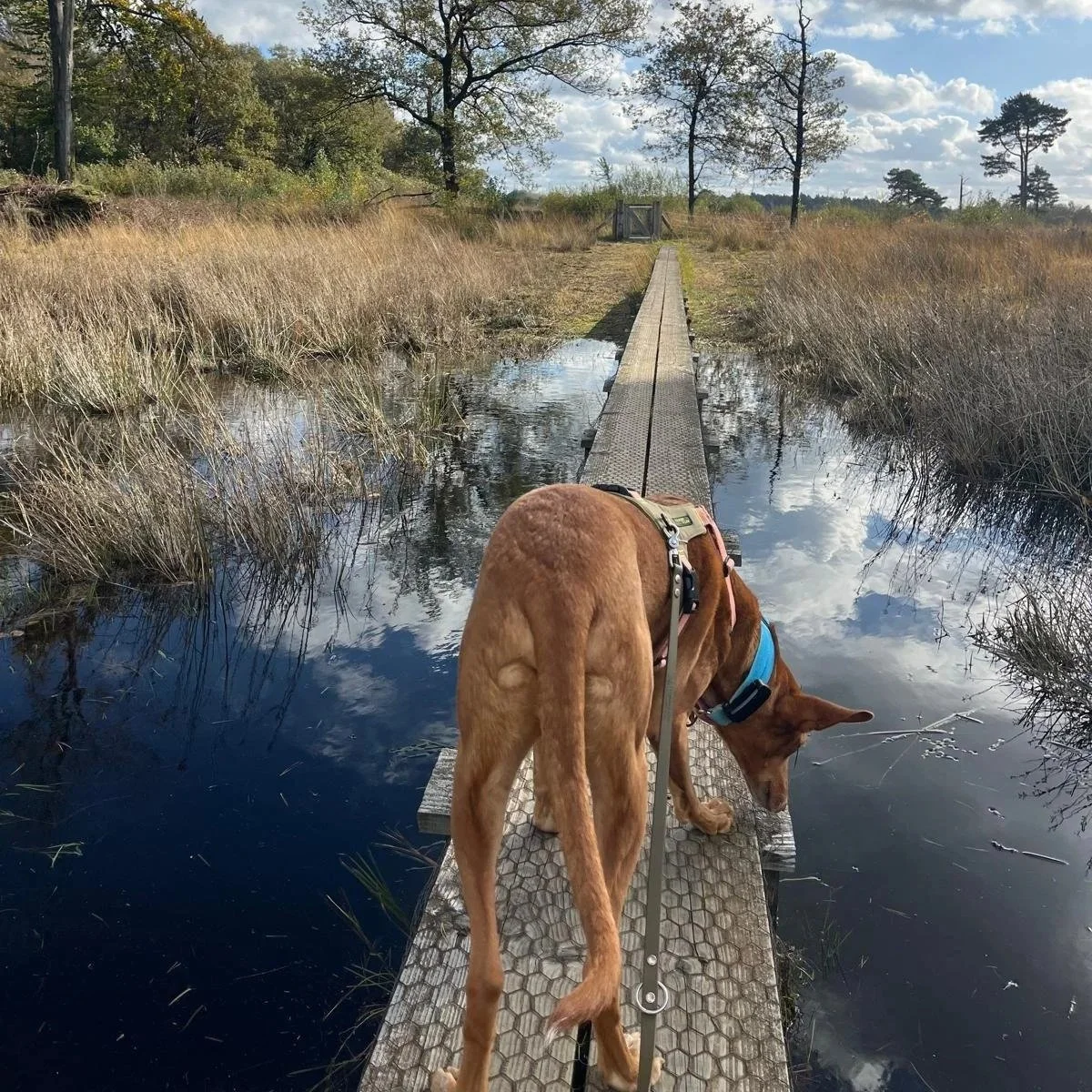
Odin out on a walk.
Regular monitoring became part of normal life.
We initially fed Odin a low-purine dry food in case he needed to begin treatment with allopurinol. Dogs taking allopurinol usually require a suitable low-purine diet, but this is not automatically necessary for every dog with Leish.
Three months later, Odin was tested again. His result was still negative. After another six months — and shortly after celebrating his first year with us — his next test came back low positive.
“Ah yes, Leish is a meanie.”
Because Leish cannot be cured completely, results can move up and down during a dog’s lifetime. A change in an antibody result does not tell the whole story, so our vet considered Odin’s general health, his blood results and the fact that he was showing no clinical signs. Together, we agreed on his next management plan.
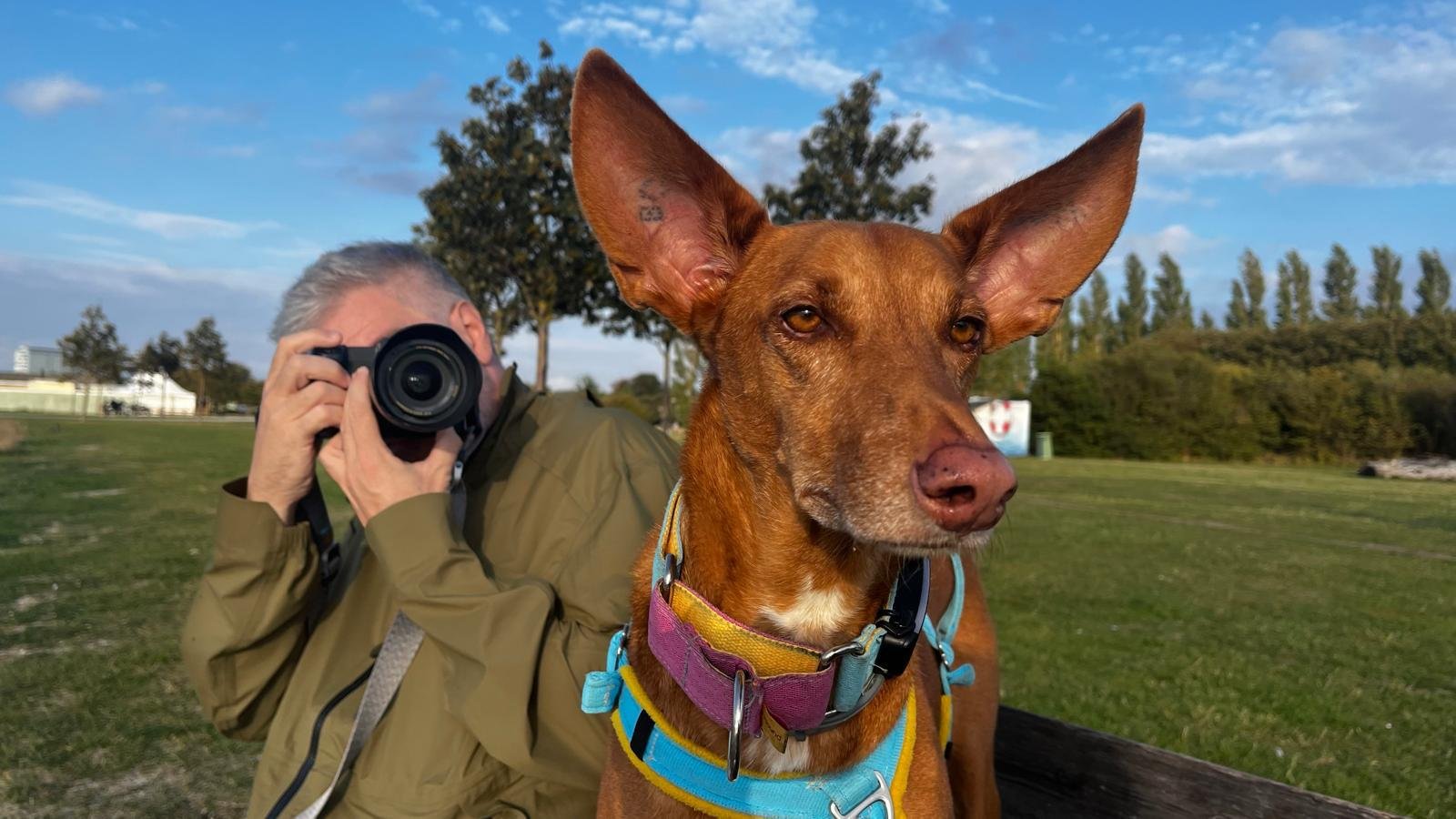
Odin being “monitored”.
Odin’s current Leish plan.
Our vet recommended another short course of Leisguard, with a further course planned later in the year. It has been straightforward to give, and we have been able to obtain it through our vet in Germany. Every dog is different, so Odin’s plan will not necessarily be the right plan for another Leish-positive dog. Treatment and monitoring should always be guided by a vet using the dog’s full results and individual medical history.
“What happens next?”
“Once your current plan is complete, we’ll test you again.”
“More blood tests?”
“Probably — and a urine test too.”
“But that pee is for marking the neighbourhood!”
“Don’t worry. You’ll get to pee on every bush again.”
Blood tests help the vet monitor Leish antibody levels alongside the dog’s general health. Urinalysis, often including a urine protein-to-creatinine ratio, is also important because it can identify protein loss and help monitor kidney health. For Odin, these checks have simply become part of his normal veterinary care.
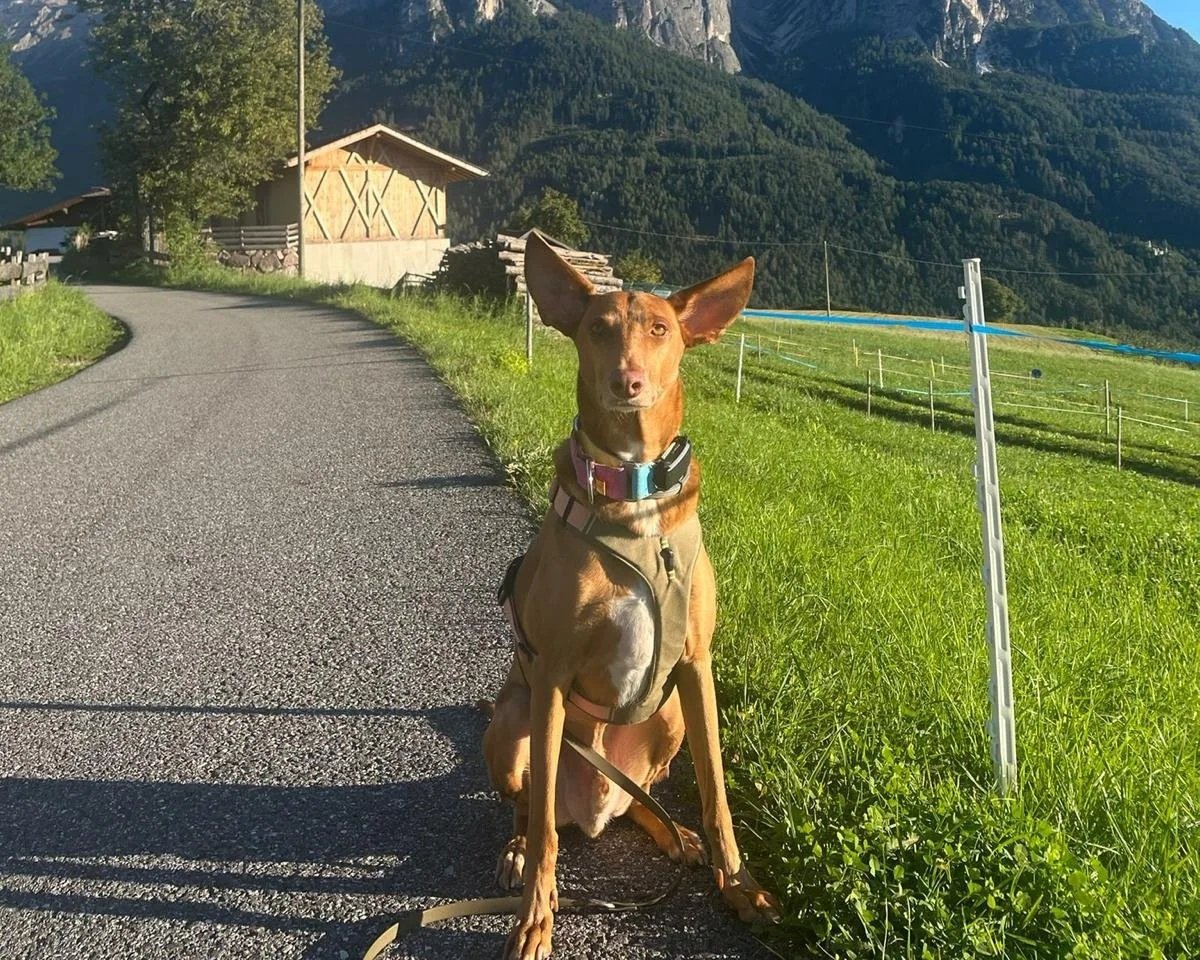
Odin on holiday.
Is Odin’s life different because of Leish?
Not really. Odin is currently showing no clinical signs. He is a happy, healthy boy who enjoys his walks, his food, his family and, most importantly, his naps. His Leish has not stopped him from travelling to his forever home or enjoying everything that came afterwards. It just means that we remain aware of his condition, follow the advice of our vet and arrange regular monitoring.
We also know which possible changes to look out for, including unexplained weight loss, changes in appetite, low energy, skin or eye problems, unusual nail growth and nosebleeds. If anything concerned us, we would contact our vet rather than waiting for Odin’s next routine check.
What about food?
There is often an assumption that every Leish-positive dog must follow a special diet for life. Odin is proof that this is not always the case. A low-purine diet is normally required when a dog is taking allopurinol, because this medication can increase the risk of certain urinary crystals and stones. Odin is not currently taking allopurinol, so his vet has confirmed that he does not need to remain on a low-purine diet.
And yes, he can still eat dry food — very useful for his self-confessed “lazy dog parents”. The right food will depend on the dog’s medication, blood and urine results and wider health, so adopters should always discuss diet with their own vet.
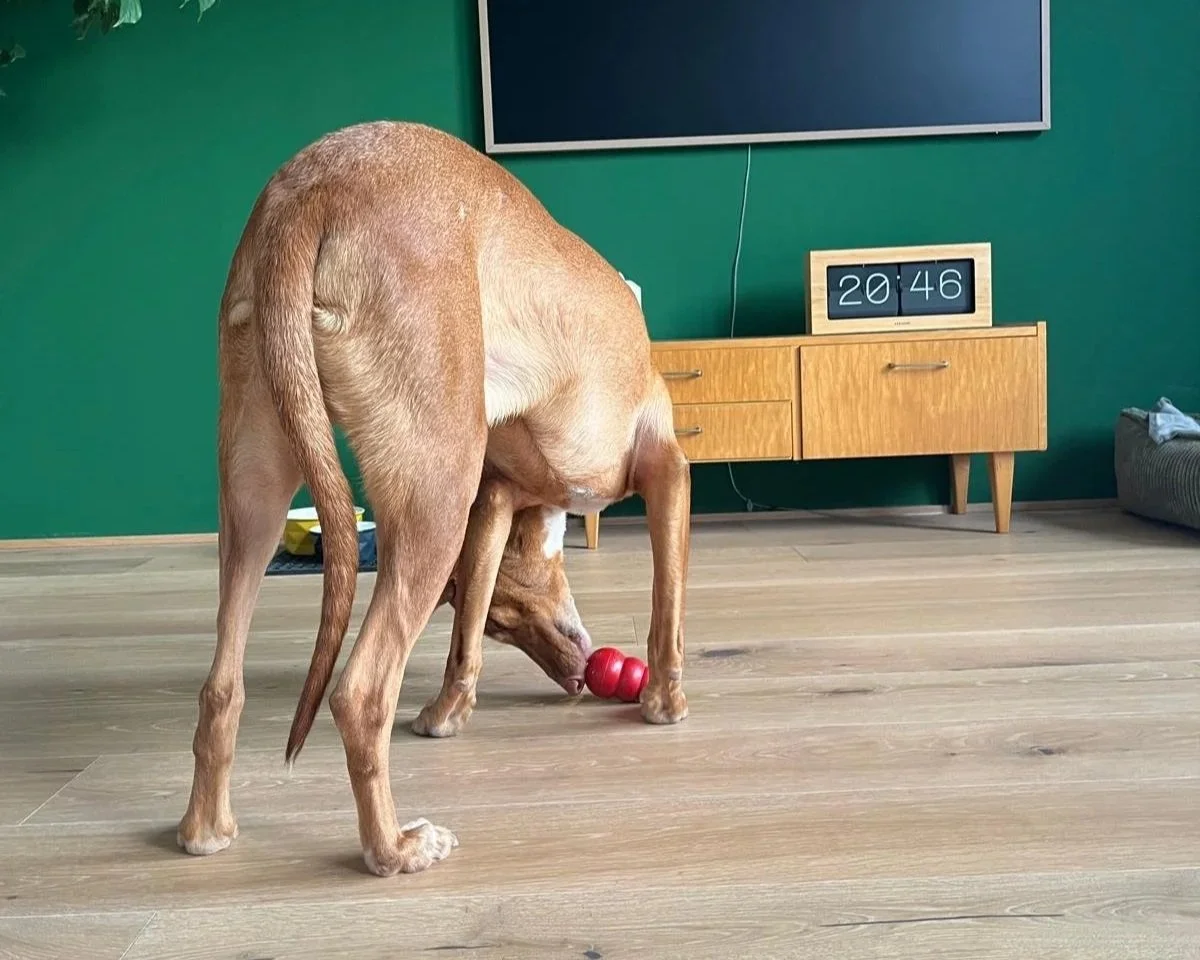
Odin working for those treats.
Would we adopt a Leish-positive dog again?
Absolutely. There is a financial commitment to consider. Leish will usually be treated as a pre-existing condition by insurers, which may mean that related medication, monitoring and veterinary care are not covered. There will also be regular tests throughout the dog’s life, even when they are well and their results are negative or very low. But annual testing is recommended by HFP in any adoption contract anyway.
Alongside that is an entirely normal dog: one who still needs walks, enrichment, affection, patience and somewhere comfortable to nap. Adopting Odin has never felt like adopting a disease. We adopted a funny, loving Podenco who happens to have a manageable health condition.
“Are you finished telling my story now?”
“Yes, that’s it for the moment.”
“Good. I have one final question…”
“What is it?”
“What do you mean, I’m adopted?”
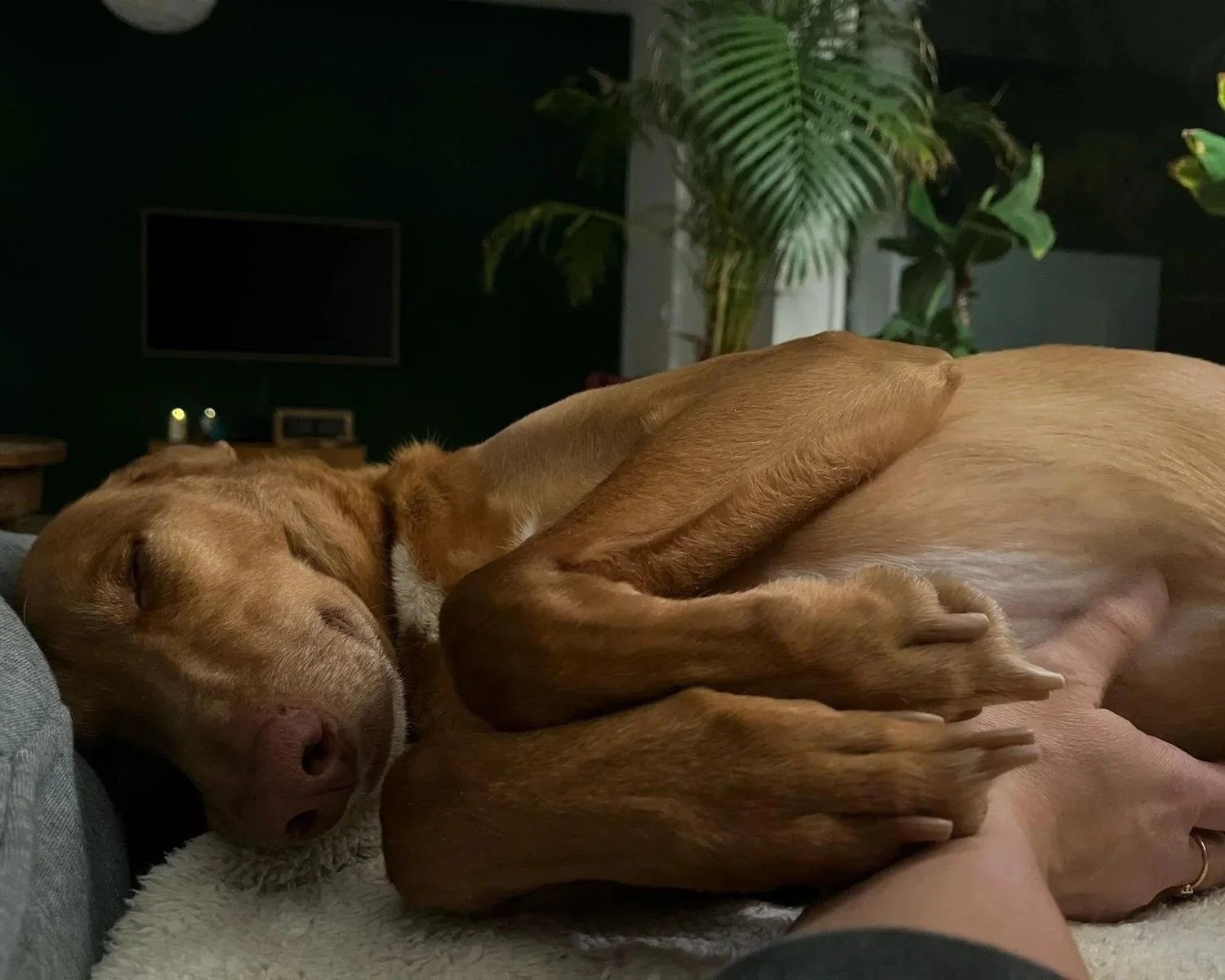
Odin doing what he does best, cuddling up with mum.
Could you offer a Leish Podenco a home?
Leish-positive Podencos are among the dogs most likely to be overlooked. Some will wait in kennels for months or even years simply because people are unsure of a diagnosis they have never encountered before. With appropriate treatment, monitoring and veterinary support, many Leish-positive dogs can enjoy happy, active lives in their forever homes — just like Odin.
You can learn more about the condition, the support we provide and the dogs currently waiting through our HFP Leish Project.
With much love! The HFP team xxx
Article written by Sandra Engel
Odin’s story describes his individual experience and veterinary plan. Leish treatment and monitoring must always be tailored to the individual dog by a suitably qualified vet.